
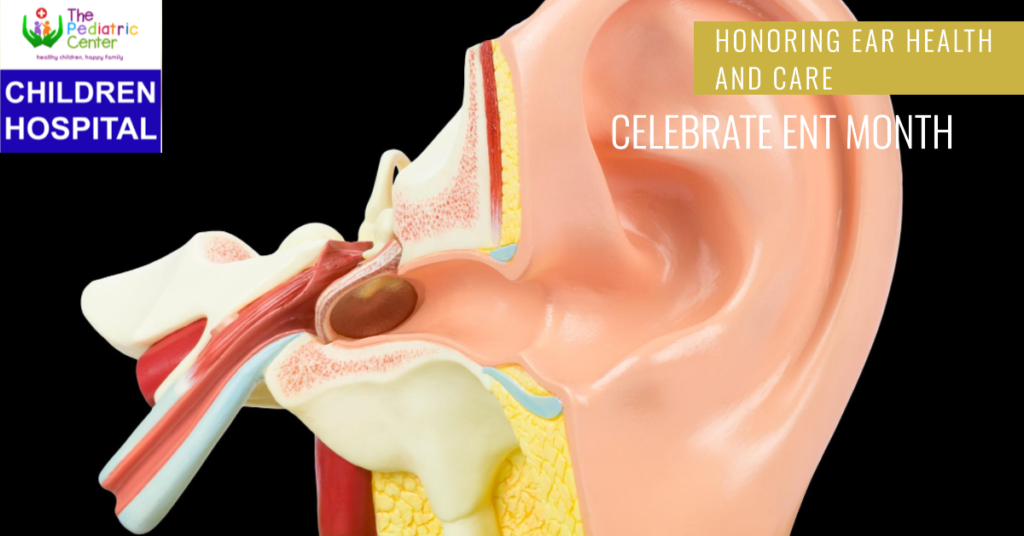
Happy ENT Awareness Month! While ears and throats often get the spotlight, the nose is the unsung, “front-and-center” hero of your respiratory system. It’s far more than just a convenient perch for your sunglasses; it’s a sophisticated, 24/7 climate control center.
Here is an overview of why your nose deserves a little extra appreciation this month.
More Than a Sniffer: The Anatomy
The nose is a complex architectural feat. While we mostly see the external “bridge” and “tip,” the real magic happens inside.
- The Septum: The wall of cartilage and bone that divides your nostrils. If it’s off-center, you’ve got a “deviated septum,” which can make breathing feel like a one-way street.
- The Turbinates: These are long, narrow passageways that help warm and moisten the air you breathe.
- The Sinuses: Four pairs of air-filled cavities that keep your head light and help resonate your voice (which is why you sound like a tuba when you’re congested).
Your Body’s High-Tech Filter
Think of your nose as a high-end HVAC system. It performs three critical functions before air even reaches your lungs:
- Filtration: Those tiny hairs (cilia) and mucus trap dust, pollen, and bacteria, preventing them from entering your system.
- Humidification: Your nose adds moisture to the air so your lungs don’t dry out.
- Temperature Control: Whether you’re in the Arctic or the Sahara, your nose adjusts the air to near-body temperature by the time it hits your throat.
When Things Go South (or Stuffy)
Even the best systems run into glitches. Here are the most common reasons people visit an ENT:
- Chronic Sinusitis occurs when the linings of your sinuses remain inflamed for an extended period, often resulting in persistent facial pain and a distinct sensation of a “heavy” head.
- Allergic Rhinitis is essentially an overreaction of the immune system to environmental allergens like pollen or pet dander, which typically triggers bouts of sneezing and itchy, watery eyes.
- A Deviated Septum happens when the internal wall of the nose is crooked or off-center, which can make breathing feel significantly more difficult through one side than the other.
- Nasal Polyps are soft, painless, noncancerous growths that develop on the lining of the nasal passages; they often lead to a feeling of persistent stuffiness or a noticeable loss of the sense of smell.
Tips for Nasal Health
Keeping your nose happy is simpler than you might think:
- Hydrate: Mucus needs to stay thin to move debris out effectively.
- Saline Rinses: Using a neti pot or saline spray can flush out allergens and irritants (just remember to use distilled or previously boiled water!).
- Don’t “Over-Blow”: Blowing too hard can actually drive bacteria deeper into your sinus cavities.
- Humidify: If your indoor air is dry, your nose will be too. A humidifier is your best friend in the winter.
Pro-Tip: If you’ve been relying on over-the-counter decongestant sprays for more than three days, stop! They can cause “rebound congestion,” making you more stuffed up than when you started.
The nose knows! If you’ve been struggling with persistent congestion, snoring, or a lost sense of smell, ENT month is the perfect time to get it checked out.
PS: Please feel free to share our articles with friends and family.
© 2025 The Pediatric Center Children Hospital
2a Sulaimon Abdullahi Street, Agungi, Lekki, Lagos
Road 2, House 20, Greenland Estate, Olokonla, Ajah-Sangotedo, Lagos