World Allergy Week: Helping Parents Protect Their Children
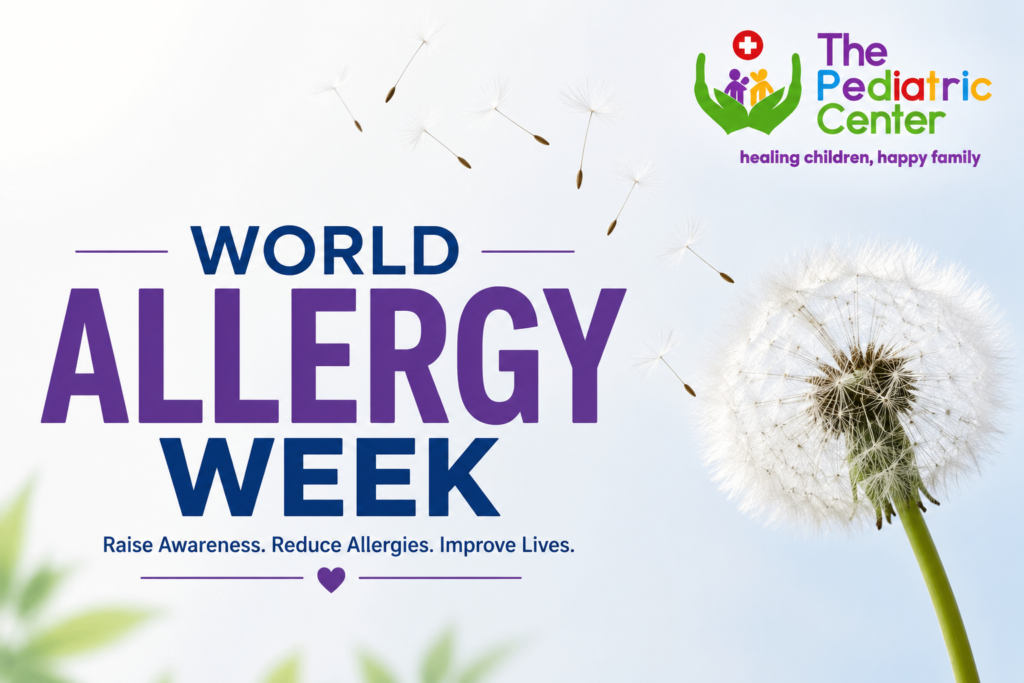
World Allergy Week is a global awareness campaign that highlights the importance of recognizing, preventing, and managing allergies. It is an opportunity to educate families about allergies and encourage early diagnosis and proper treatment.
What Are Allergies?
An allergy occurs when the body’s immune system reacts to a substance that is normally harmless. These substances, known as allergens, may include:
- Certain foods (such as eggs, peanuts, milk, soy, fish, and shellfish)
- Dust mites
- Pollen
- Pet dander
- Insect stings
- Certain medications
Common Signs of Allergies in Children
Children with allergies may experience:
- Frequent sneezing
- Runny or blocked nose
- Itchy or watery eyes
- Skin rashes or eczema
- Hives (raised, itchy bumps)
- Persistent coughing or wheezing
- Swelling of the lips, face, or tongue after eating certain foods
In severe cases, allergies can cause anaphylaxis, a life-threatening reaction that requires immediate medical attention.
How Parents Can Help Prevent Allergic Reactions
Although not all allergies can be prevented, parents can reduce the risk of allergic reactions by:
- Identifying and avoiding known allergy triggers.
- Keeping the home clean and free from dust where possible.
- Reading food labels carefully before giving new foods.
- Introducing new foods according to your pediatrician’s advice.
- Informing schools and caregivers about your child’s allergies.
- Following your doctor’s treatment plan if your child has been diagnosed with an allergy.
When Should You See a Doctor?
Seek medical attention if your child:
- Has repeated allergic reactions.
- Develops difficulty breathing or wheezing.
- Experiences swelling of the face, lips, or tongue.
- Has a severe reaction after eating food, taking medication, or being stung by an insect.
Early diagnosis and proper management can help children live healthy, active lives.
Key Message for Parents
World Allergy Week reminds us that awareness can save lives. Knowing your child’s allergy triggers, recognizing the warning signs, and seeking prompt medical care are essential steps in keeping your child safe.
Healthy children start with informed parents. If you suspect your child has an allergy, consult your pediatrician for proper evaluation and care. 💙
PS: Please feel free to share our articles with friends and family.
© 2026 The Pediatric Center Children Hospital
2a Sulaimon Abdullahi Street, Agungi, Lekki, Lagos
Road 2, House 20, Greenland Estate, Olokonla, Ajah-Sangotedo, Lagos
Unsubscribe